You can still love someone and suddenly not know what is true.
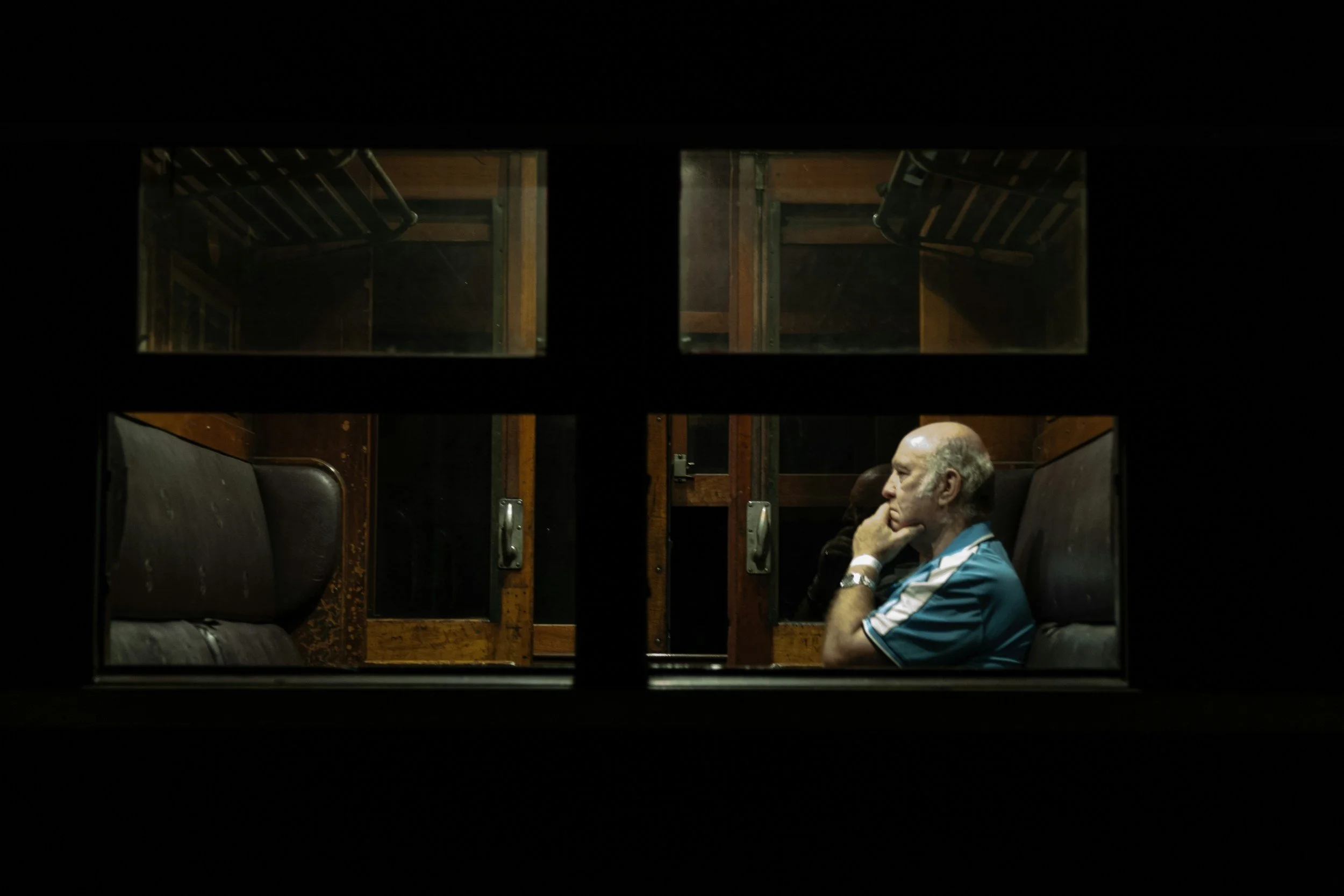
You glance over at the nightstand and tap your phone.
2:36 a.m.
Another sleepless night.
He's lying right there, sound asleep. His phone is on the charger. There's little stopping you from picking it up and thumbing through it.
You don't want to.
You've already had this conversation with yourself. You don't want to become someone who checks his phone while he sleeps. You don't want to live this way, counting minutes, noticing changes in his voice, wondering why he took his phone into the bathroom.
But the question is sitting there with you in the dark.
What if there's something else?
You could look.
And if you find nothing, maybe you'll feel better for a little while.
But what if you do? And what if you don't?
Because even if you put the phone back exactly where you found it, the question won't necessarily disappear. You might lie there wondering whether he deleted something. Whether he has another phone. Whether you checked the right place. Whether the explanation you were given was actually the whole truth.
This is one of the cruelties of betrayal: the thing you desperately want is certainty, but certainty is exactly what you no longer know how to find.
You remember how easily you used to trust the ordinary things.
A late night at work was a late night at work.
A change in plans was a change in plans.
A kiss goodbye was just a kiss goodbye.
Now even the most mundane moments can become loaded with possibility, and you hate what this is doing to you.
You don't want to interrogate someone you love. Ask the same question three different ways. You don't want temporary reassurance that never quite sticks.
You want to be able to believe him.
You want to know that when he says, "I'm telling you everything," you can let yourself believe him.
And somewhere underneath all of that is an even more frightening question:
Can I trust my own judgment again?
Because betrayal doesn't only change the way you see the person who hurt you.
It can change the way you see yourself.
You wonder what you missed, what you explained away. Which moments you now have to reinterpret. You wonder whether you were too trusting, whether you should have known, whether the person you were before all of this was naive.
Meanwhile, the rest of your life keeps moving.
You go to work. You answer emails. You make dinner. You show up for your children. You have conversations with friends who may have no idea that you spent half the night awake, staring at a phone that you never picked up.
From the outside, very little may have changed.
Inside, almost everything has.
Betrayal doesn't only change how you see your partner
It can change how you remember your own life.
You may find yourself going back through old conversations, vacations, birthdays, nights when you were certain everything was fine. A detail that once seemed insignificant suddenly feels loaded. You start wondering what you missed, what you explained away, what you should have noticed.
It can be tempting to believe that if you can reconstruct the past carefully enough, you'll finally understand what happened.
But there is no version of the past that gives you back the certainty you had before.
Part of healing is learning to live with what you cannot change while beginning to trust yourself again.
That may mean grieving the relationship you thought you had. It may mean confronting things that weren't working long before the betrayal. It may mean recognizing the ways you contributed to the difficulties in your relationship without taking responsibility for someone else's decision to deceive you.
These distinctions can be difficult to hold when everything feels emotionally charged.
Therapy gives you somewhere to sort through them.
You don't have to know whether you're staying
One of the hardest parts of betrayal is being expected to make decisions before you have had time to understand what has happened.
You may love your partner and still not know whether you can live with what happened.
You may want to leave and still find yourself longing for the person you thought they were.
You may have children, a home, a history, a shared life that cannot simply be separated into before and after.
Friends and family may have opinions. Your partner may want an answer. You may feel pressure to forgive, to leave, to fight for the marriage, or to stop thinking about it and move forward.
You don't have to do any of those things on someone else's timeline.
Therapy can give you space to become clearer about what you actually want and what you would need in order to feel safe making that decision.
Sometimes that means working toward reconciliation.
Sometimes it means preparing to leave.
Sometimes it means allowing yourself to remain uncertain for a while.
You are allowed to take your time.
Rebuilding trust is more than deciding to forgive
If you and your partner are hoping to stay together, there is a lot of work between “I want this relationship” and actually feeling safe in it again.
The betrayed partner may need answers, consistency, transparency, and time. There may be anger that returns unexpectedly, questions that have to be asked more than once, and moments when an ordinary interaction suddenly brings the betrayal back into the room.
The partner who betrayed the relationship has their own work to do: understanding the choices they made, tolerating the pain they have caused, becoming more honest about themselves, and learning how to respond to their partner's hurt without becoming defensive or asking for the discomfort to end.
Neither person can simply decide that the betrayal is over.
Trust is rebuilt through what happens afterward.
And sometimes, through that process, couples discover that they can create a relationship with more honesty and intimacy than they had before. Not because the betrayal was somehow necessary, but because it forced conversations that had previously been avoided.
Individual therapy can be a place to find yourself again
You don't have to bring your partner to therapy.
In fact, sometimes you need a place that belongs entirely to you.
A place where you can say the things you're not ready to say out loud. Where you can be furious one day and miss them the next without having to defend the contradiction. Where you can talk about staying without someone assuming you're weak, or leaving without someone congratulating you for being strong.
Individual therapy can help you understand what has happened to your sense of yourself and what you need now.
We can make room for the grief, anger, shame, confusion, and fear while also paying attention to something quieter: your own judgment.
What do you know?
What do you need?
What are you willing to accept?
What have you been telling yourself you should want?
And who are you becoming as you begin to make decisions from a clearer sense of yourself rather than from the shock of what happened?
What betrayal recovery therapy looks like
There is no single way to move through betrayal.
Some sessions may be about making sense of what happened. Others may be about the relationship you are trying to decide whether to preserve. Sometimes the most important work is simply having somewhere to put the feelings that have become too large to carry alone.
In individual therapy, we can slow down the experience enough to understand what has been shaken, your trust in your partner, your trust in yourself, your assumptions about love, or your sense of where your life is going.
In couples therapy, we can work with both sides of the relationship as you try to understand what happened and determine whether something new can be built between you.
The work is honest.
There may be difficult things to say and difficult things to hear. There may be anger, grief, defensiveness, tenderness, and uncertainty, all within the same conversation.
The goal is not to force a particular outcome.
It is to create enough room for both people to understand what has happened and for the betrayed partner, especially, to have their experience taken seriously.
If the relationship continues, therapy can support the slow process of rebuilding something trustworthy.
If it doesn't, therapy can help you move through the ending without losing yourself inside it.
You can feel whole again
Right now, it may be difficult to imagine.
You may still be waking up in the middle of the night. You may still be looking for answers. You may still have days when you feel certain you know what you want and others when you can't imagine making any decision at all.
That doesn't mean you're failing to move forward, you're trying to find your footing after something that changed the way you understand your own life.
With time, the questions can become different.
Not What did I miss?
Not How could I have been so wrong?
Not How do I make this stop hurting?
But:
What do I know about myself now?
What kind of relationship do I want?
What do I need in order to feel safe and respected?
What kind of life do I want to build from here?
The betrayal will become part of your story.
It does not have to become the story of who you are.
Betrayal Recovery Therapy in Seattle and Throughout Washington
Seattle Counseling Center offers individual therapy for people recovering from betrayal, as well as couples therapy for partners trying to understand what happened and determine what comes next. We provide in-person therapy in our Queen Anne office and online throughout Washington State.
You don't need to know whether you're staying or leaving before you begin. You don't need to know whether forgiveness is possible. You don't even need to know exactly what you need.
You can start with what happened. And we can begin there.